What Altman actually said
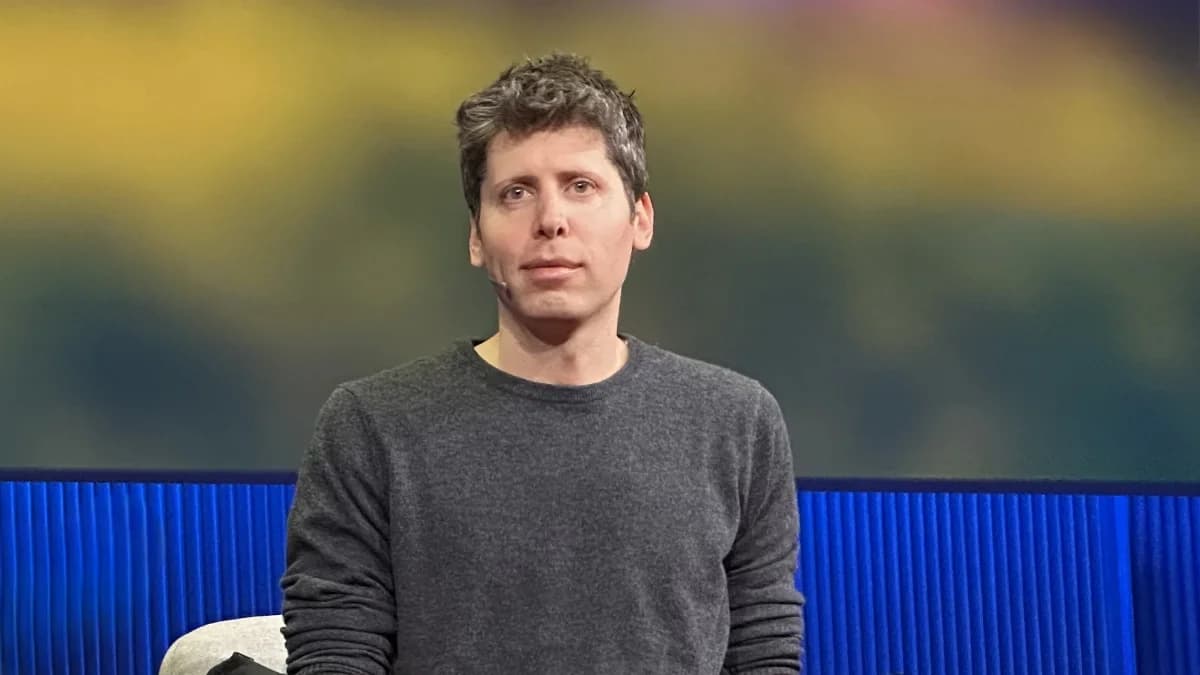
On the October 29 episode of the Cheeky Pint podcast, Stripe co-founder John Collison asked Sam Altman about supply constraints in AI hardware. Altman was talking about local inference, the idea that open models running on personal computers could ease the need for giant data centers. His answer:
"From a global allocation perspective, actually, it's quite terrible to have everybody have a bunch of the world's limited supply of DRAM sitting in their own computer and being used 5% of the time. You want maximum utilization in the cloud if you're trying to deal with this very supply-constrained environment."
Note the framing. He did not say your PC is terrible. He said the allocation is terrible: a scarce resource, idle most of the time, in a shortage.
The math that is real
The shortage is not in dispute. Conventional DRAM contract prices jumped roughly 93 to 98 percent in the first quarter of 2026 alone, according to TrendForce, and were up 171 percent year on year by May. At retail, a 32GB DDR5 kit now runs about $500, up from roughly $400 in early April, in what Tom's Guide calls a "cloud tax." TweakTown tracked a Corsair 32GB kit that once sold for $80 and now costs $399.
And the utilization logic has a real core. A server rented by thousands of customers keeps its memory busier than a home PC that sits idle through work hours and sleep. In a shortage, putting the scarce input where it gets used most is, on paper, efficient.
The conflict
Here is the part Altman did not volunteer. OpenAI is one of the largest buyers of the very memory he calls scarce. In October 2025, Altman signed letters of intent with Samsung and SK Hynix to supply memory for Stargate, OpenAI's data center buildout. SK Group said the projected demand could reach 900,000 DRAM wafers a month, which TechInsights estimated at as much as 40 percent of global output. That 40 percent is an estimate, not an OpenAI-confirmed number, but the direction is undisputed: the companies warning about the shortage are also driving it.
When Collison asked why high prices had not pulled new suppliers into the market, Altman answered, "I think the invisible hand is failing right now." New DRAM fabs take years and billions to build, which is true. It is also convenient for the buyer already at the front of the line.
The 5% number has no data
The most quoted figure in Altman's answer is also the least supported. That PC memory is "used 5% of the time" comes with no source, no definition, and no denominator. Five percent of what? Time with a model loaded? Tokens generated? Nobody knows, because he did not say.
There are three problems with taking it literally. First, PC RAM does not only serve AI inference. It runs the operating system, the browser, games, creative software, and development tools. Idle capacity for one workload is not wasted memory. Second, cloud utilization is not 100 percent either. Data center fleets carry idle GPUs and memory across bursty demand. Third, no public measurement of average consumer RAM utilization for local inference exists to check the claim against. The honest status of the 5% is: unverified.
The reactions
The internet did what it does. Elon Musk posted an Inglourious Basterds meme. Cardano founder Charles Hoskinson joked about his 64GB of RAM and Roller Coaster Tycoon. Ripple's David Schwartz went with "cold, dead hands." Under the jokes, the common thread was that consumers did not cause this shortage.
The market backdrop sharpened the mood. Micron shut down its Crucial brand for regular customers, removing a staple of DIY PC building. Every price chart in the discussion slopes the same way: up.
Why this matters beyond the meme
Altman's argument is ultimately about where intelligence should live. His picture is centralized: pool the world's memory in a few clouds, keep it fully utilized, and sell the resulting intelligence back one token at a time. The practical result for the user is a meter, rate limits, and rules set by the provider.
Local inference is the opposite bet: the model runs on hardware you own, with zero API costs and zero telemetry, and the data never leaves your machine. It is less efficient in Altman's global allocation math. It is more free in every other sense.
Both things can be true at once. Altman is right that shared hardware uses scarce memory better than idle personal machines. And his critics are right that the person making this argument runs a company whose demand helped make the memory scarce, and whose business model benefits when you agree that your computer should not do the job.
The RAM debate is really a preview of the next decade's default: intelligence as a utility you rent, or as a tool you own. Altman has made his choice clear. The rest of us still get one.
SOURCES - MoneyWise: Sam Altman says the RAM in your PC is a waste - State of AI: Sam Altman says your laptop is hoarding the world's memory - ExplainX: Altman local AI DRAM claim, claimed vs verified
Cover photo: Steve Jurvetson, CC BY 2.0, via Wikimedia Commons.
About the Author
Practitioner in full-funnel digital architecture, server-side attribution telemetry, and algorithm-informed media acquisition at Rising36.
Discuss This With Rising36
Questions about AI & Hardware? Our team works on this every day — tell us what you're trying to do.