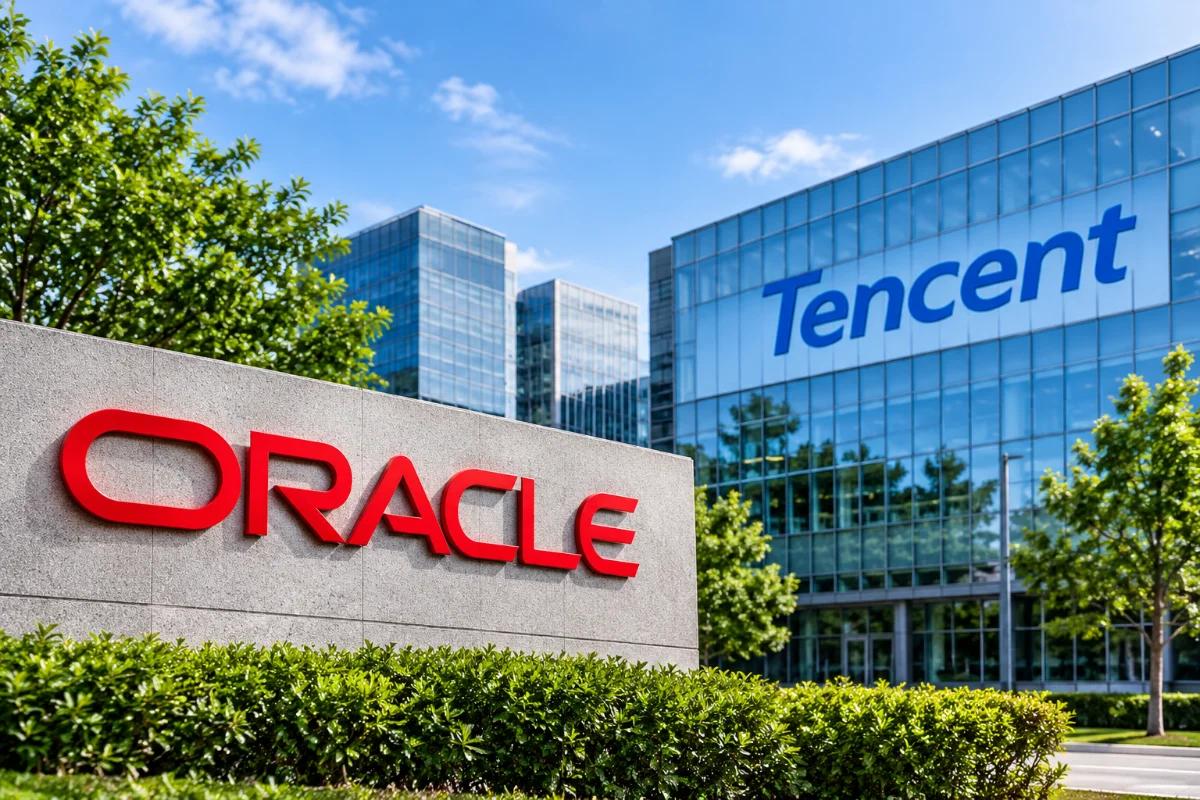
The deal that was
Tencent's largest overseas chip deal was never formally announced by either company. According to the Financial Times, first reporting on October 1, Tencent signed a five-year lease worth an estimated $7 billion with Oracle, with an upfront payment of around $2.1 billion. The deal would have given Tencent access to about 100,000 advanced AI chips housed in Oracle data centers across Southeast Asia, chips it cannot import into China under US export controls.
Oracle's own September 10 earnings release and its Form 10-Q filed September 11 make no mention of Tencent. The arrangement lived entirely in reporting until November 4, when the FT reported that Oracle had canceled it after bowing to pressure from the Trump administration.
The loophole
Here is the part that makes this story bigger than one canceled contract. The deal was legal.
US Export Administration Regulations govern physical hardware crossing a border. They do not govern remote compute sessions run from a data center in a third country. The chips would have stayed in Southeast Asia. Tencent's engineers would have rented their computing power from afar. Nothing would have crossed into China except results.
That is the loophole, and it was not a secret. Chinese AI developers have been renting access to accelerators that are not available in their home country to get around US export controls, and the arrangement was widely understood in the industry. The reported $7 billion value and 100,000-chip capacity describe the proposed five-year lease, not confirmed revenue or delivered hardware, but the structure itself was real enough to worry Washington. The scarcity underneath it is the same one driving the whole AI hardware market right now: the world's most advanced chips are rationed by politics as much as by production. We covered that scarcity from the other side last week: Sam Altman Says Your RAM Belongs in a Data Center.
The phone call
According to the FT, citing people familiar with the matter, US officials approached Oracle directly to raise concerns about the Tencent deal. Oracle then canceled the contract. The FT's account rests on two unnamed sources, and the details of what officials said and how Oracle responded are not independently confirmed.
That is the whole story, and it is also the caveat. Every outlet carrying this news is relaying the FT's reporting. Reuters said it could not immediately verify the report. Oracle, Tencent, and the White House did not respond to Reuters' requests for comment. Neither company has publicly confirmed the cancellation, and no regulatory authority has announced action to close the cloud-compute loophole. The reported US intervention should not be treated as an official announcement of a new export-control rule, because no such rule has been announced.
What nobody has confirmed
The open questions are the story now. The precise cancellation date is unconfirmed. Any termination payments are unconfirmed. Tencent's replacement computing strategy is unconfirmed. Whether the deal is scrapped for good, or merely paused while the politics cool, is unconfirmed.
The other side of the pressure is also worth noting. Tencent received visits from top officials in Guangdong, where the group is based, who asked the company to support domestic Chinese chips. So Tencent was being squeezed from both directions: Washington did not want it renting American compute, and Beijing did not want it depending on American compute. The two governments disagree about almost everything except this: Tencent should not be using foreign chips.
The market's reaction was mixed, which tells its own story. Oracle shares fell more than 2 percent in overnight trading ahead of Wednesday, then traded slightly higher during the day. Investors are asking the same question as everyone else: how will Oracle fund its AI buildout? The company plans to raise $20 billion for AI infrastructure expansion, and a $7 billion customer walking out the door does not make that easier.
What it means for businesses
This is not a story about chips. It is a story about how fast the rules can change under a signed contract.
First, legality is no longer the same as safety. The Oracle-Tencent arrangement complied with the written rules, and a phone call killed it anyway. Any business building on cross-border cloud, data, or compute should assume the informal rules matter as much as the published ones. Second, the AI supply chain is now a geopolitical asset, and every supplier in it is a potential pressure point. Third, the companies that survive this era will be the ones with more than one source for everything that matters: chips, cloud, customers, and cash.
For a small agency or a small business, the practical lesson is narrower. Do not build a critical dependency on a single vendor, a single platform, or a single country's rules. The bigger the vendor, the more visible the target.
The question nobody can answer yet
Was this a one-off intervention, or the start of a policy? If Washington is now willing to kill legal arrangements by phone call, every similar lease, every third-country data center, and every cloud deal with a Chinese customer is suddenly under review. And if Beijing pushes its champions toward domestic chips at the same time, the AI world splits a little further into two stacks that do not talk to each other. The FT's report may or may not hold up in full. But the direction it points in is unmistakable, and it will not reverse itself.
Sources
- •The Business Times: Oracle scraps US$7 billion deal to lease chips to Tencent
- •TFTC: Tencent Leases 100K Nvidia Chips via Oracle Overseas
- •Invezz: Oracle stock in green despite reported $7B Tencent chip deal cancellation
- •The Hindu BusinessLine: Oracle cancels $7 billion chip leasing deal with China's Tencent, FT reports
Cover: AI-generated illustration.
About the Author
Practitioner in full-funnel digital architecture, server-side attribution telemetry, and algorithm-informed media acquisition at Rising36.
Discuss This With Rising36
Questions about AI & Policy? Our team works on this every day — tell us what you're trying to do.